Across Bedford, from Victorian terraces near the Embankment to new builds at Wixams and busy units on Priory Business Park, households and businesses are turning to battery storage to take control of energy costs and reliability. Pairing a home or commercial battery with solar panels—or using a standalone system to shift usage to cheaper tariffs—can cut bills, lower carbon and add resilience during occasional outages. This guide explains how Bedford properties can benefit, what to consider before installing, and the real-world results you can expect.
Why Battery Storage Matters for Bedford Homes and Businesses
Energy use in Bedford is changing quickly. More homes have rooftop solar, more drivers charge EVs overnight, and more businesses are looking to stabilise costs. A well-sized battery storage system stores excess solar generation in the day or charges from off-peak tariffs, then powers your property when energy is expensive. Instead of exporting daytime solar for a modest Smart Export Guarantee payment, you can self-consume far more of what you generate—often boosting your effective solar ROI substantially.
For households, the typical impact is tangible. A 4–8 kWh battery on a 3–5 kWp solar array can reduce grid imports by 40–70% across the year, depending on occupancy, shading and tariff. In winter, smart charging on cheaper night rates can still deliver savings, especially with time-of-use plans such as off-peak EV tariffs. For EV owners in areas like Biddenham or Kempston, scheduling the battery and the car together often unlocks even bigger gains by shifting a larger share of total energy to low-cost windows.
Commercial premises across Bedford—cafés on the High Street, small manufacturers in Elms Farm Industrial Estate, offices at Bedford Heights—see different but equally strong benefits. Batteries can shave peak demand, limit exposure to costly half-hourly rates, and give short-term backup for tills, routers and security systems. For sites with refrigeration, workshops or variable machinery loads, smoothing those spikes helps control both bills and power quality. In multi-tenant spaces, storage can complement LED upgrades and modern controls to create a unified efficiency strategy.
Resilience is another driver. While Bedford’s grid is generally stable, storms, planned maintenance or local faults do cause occasional interruptions. Many modern systems offer a backup circuit or full-home backup (subject to system size and wiring), keeping essentials like lighting, Wi-Fi, heating controls and refrigeration running. Combined with intelligent monitoring, storage also gives visibility: you can see when and how energy is used, tweak schedules, and steadily reduce waste. Add the environmental upside—greater self-reliance on clean solar and reduced peak-time demand—and the case for battery storage in Bedford becomes even stronger.
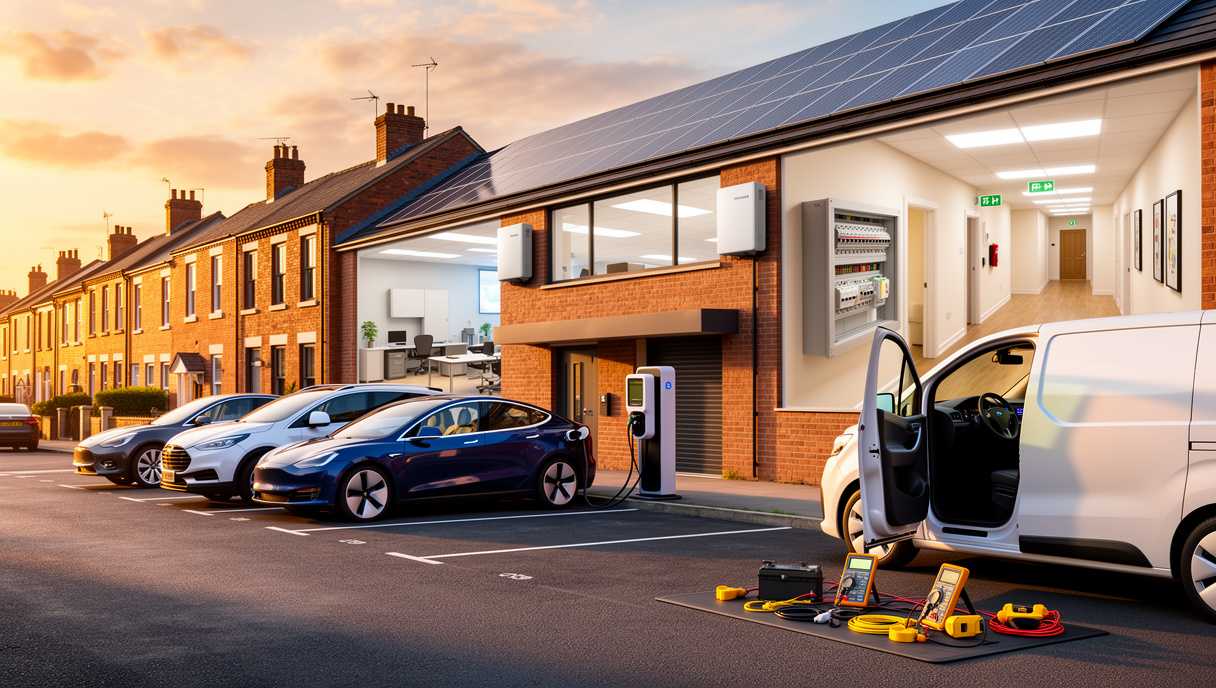
How Professional Design and Installation Maximise Performance
Getting the most from battery storage begins with design. A professional survey should profile your load using recent bills or smart meter data, review roof orientation and shading (if solar is present or planned), assess available space, and discuss how you use energy across the day. From there, the installer can recommend capacity (kWh), power rating (kW), and whether to use a hybrid inverter (DC-coupled to solar) or AC-coupled battery. Homes typically land in the 5–15 kWh range, while Bedfordshire SMEs may require 20–100 kWh—or modular systems that can expand later.
Compliance and safety are essential. In the UK, installations must meet BS 7671 (IET Wiring Regulations) and manufacturer guidelines. Correct location, fire separation where applicable, cable routing, surge protection, reliable isolation and appropriate RCD protection all matter. Good design also incorporates a safe shutdown procedure, labelling, and commissioning tests. For properties with three-phase supplies—common in workshops and light industrial units—phase balancing and inverter selection are key to solid performance and compliance.
Grid connection rules are another core piece. In Bedford, applications to the local DNO (UK Power Networks for this area) are handled under G98 or G99 depending on system size and export capability. Export-limiting devices may be needed to keep within approved thresholds, especially in streets with high solar penetration or where the local network has constraints. A competent installer manages this paperwork, ensures the correct protection settings, and provides the relevant certification on handover.
Technology choices influence lifespan and results. Many domestic and commercial systems now use lithium iron phosphate (LFP) chemistry for its robust cycle life and thermal stability. Look for clear warranties (often 10 years), defined cycle or throughput limits, and a stated usable capacity. Consider C-rate (how fast the battery can charge/discharge), especially if you plan whole-home backup or to cover high-power loads like EV chargers or heat pumps. Reliable monitoring via app or portal, plus firmware updates and remote diagnostics, make ongoing optimisation easier. Finally, be aware of cost incentives: energy-saving materials including stand-alone batteries currently benefit from 0% VAT, and pairing with solar may unlock SEG export revenue and better tariff options—factors a local installer will help you navigate.
Real-World Scenarios in Bedford: From Terraces to Business Parks
Because every site is different, examples help clarify what to expect. Picture a three-bed semi in Wixams with a 4.2 kWp solar array. Adding a 10 kWh battery allows most daytime excess to be stored and used in the evening. Across spring and summer, grid import plummets; in winter, the battery schedules partial charging at off-peak times to cut high-rate consumption. With sensible appliance use and EV charging planned to align with cheaper periods, annual import might drop by 60–65%. Bills fall, comfort stays high, and the household gains backup for essentials during any brief power cuts.
Now consider a Kempston café with fridges, coffee machines and a small bakery oven. A 20 kWp rooftop solar system coupled to a 30 kWh battery can shave lunchtime peaks and offset morning pre-heat loads with stored off-peak energy. Even on cloudy days, the system can flatten spikes that push up costs on variable tariffs. Measurable gains include steadier voltage, fewer nuisance trips, and a more predictable energy spend—priceless for a business managing tight margins. If the café expands, modular batteries and inverters can scale with demand.
For light industrial units in Elms Farm Industrial Estate or Priory Business Park, batteries also support power quality and resilience. A 50–80 kWh system can buffer machinery starts, reduce maximum demand charges on certain contracts, and supply short-duration backup so production and IT stay online during brief outages. Where solar roof space is limited, strategic use of off-peak charging still delivers savings, especially for sites operating early or late shifts. Add smart controls to pre-charge before known peaks, and the system becomes a daily cost-management tool rather than a passive asset.
Schools, community centres and places of worship across Bedfordshire benefit in similar ways. Daytime solar generation aligns with use; storage extends that value into late afternoon events and reduces reliance on peak-rate imports. By integrating battery controls with LED lighting schedules, heating setpoints and EV charge points for staff, sites can steadily trim overheads while supporting decarbonisation goals. Routine maintenance—visual checks, software updates, functional testing of backup circuits—keeps performance consistent year after year. Many owners also schedule periodic electrical inspections to ensure broader compliance and safety as facilities evolve.
When comparing quotes, focus on clarity: usable battery capacity (kWh), inverter power (kW), expected annual savings based on your tariff and usage profile, cycle life and warranty terms, backup capabilities, monitoring features, and whether DNO approvals and certification are included. Ask about placement (garage, utility room, external enclosure), acoustic levels, temperature tolerance, and expansion paths. In Bedford, where property types range from compact terraces to sprawling warehouses, a tailored design is the difference between “works on paper” and “works brilliantly.” For a local perspective and a system designed around your priorities, explore Battery Storage in Bedford to see how a professional installation can unlock reliable savings and long-term resilience.

Ho Chi Minh City-born UX designer living in Athens. Linh dissects blockchain-games, Mediterranean fermentation, and Vietnamese calligraphy revival. She skateboards ancient marble plazas at dawn and live-streams watercolor sessions during lunch breaks.